
3 Underrated Strategies for Your Calorie Deficit
When it comes to pursuing a fat loss goal, we know there are two main necessities to successful fat loss:
First, consistency in a calorie deficit.
Second, adequate protein intake.
These two necessities are our top priority, but they don’t encompass all of the strategies that help us make these actions possible. Today I want to talk through three of the most underrated strategies that help us achieve that consistency and feel good during a calorie deficit so that our fat loss goals don’t come at the expense of our energy, workouts, recovery, or relationship with food.
The way I approach a calorie deficit is honestly quite similar to how I approach my normal nutrition (similar habits, food choices don’t change too much), but there are a few things I push higher on my priority list that often get overlooked. I completed a calorie deficit myself at the end of last year (my first “real cut” in about 10 years!) and leaned on these strategies hard for appetite management and sustainability:
PRIORITIZING SLEEP
I recognize that there is no magic that we can wave to make our kids sleep or lighten our workload so that we can get to bed earlier A “perfect” 8 hours of sleep per night may not be doable for all. However, when in a deficit, sleep automatically becomes my top priority (yep, even over protein and tracking food). I know that when I’m extra tired, my decision-making skills are compromised, I’m going to crave more hyper-palatable foods, and making choices that align with my goals feels much harder than it needs to be. Also, prioritizing earlier bedtime makes me less likely to feel snacky in the evenings!
FOCUSING ON FIBER
In a deficit, my fiber target becomes a major focus. I enjoy vegetables, so they’re a typical staple in my day no matter what my goals are. But during a cut, I make high-volume foods my biggest priority. High-volume foods are those high in water and fiber content. They keep us full, they bulk up our meals, and they’re typically relatively easy to add into your day: more veggies added to an egg scramble for breakfast, snacks of fruits and veggies instead of (or in addition to) pretzels, meals enjoyed over a bed of lettuce, lots of salad kits making their way into meals as easy sides. Typically, I eat a fair amount of fruits and veggies and assume I’m getting enough fiber. During a cut, however, I’m focusing on that fiber number (usually aiming for 25-30g minimum) just as much as I’m focusing on protein.

SETTING A STEP TARGET
I typically aim (loosely) for 10K steps a day just to ensure some movement (while I work in the health space, that really means I just spend 10 hrs a day on my computer) but I acknowledge that the 10K number is totally made up and I don’t sweat it. During my last deficit, I made it a major daily goal to get 12K steps a day. This goal was multipurpose - first, a higher energy output allowed me to keep my deficit targets higher. Second, a step goal became a great target that encouraged me to move more and to create a habit of morning or afternoon walks during otherwise sedentary days.
As with every other part of our nutrition, the habits and strategies that support us may look different person to person. These three may not be supportive to you, and that is ok!
What does feel important for all is remembering that our fat loss goals can be approached by adding in more -- more sleep, more movement, more fruits and veggies -- instead of believing that the pursuit of body composition goals must come from cutting out foods we love, avoiding eating out, and assuming that our entire time in a deficit needs to be travel and celebration-free.


We believe that the best way to achieve your fat loss goals is by working with a coach who creates a plan specific to you - your needs, your preferences, and your goals. A sustainable approach to our nutrition is essential to long-term habits and success. For high-support coaching and guidance, apply for our 1:1 Nutrition Coaching here.

When hunger hits and you have no plan, willpower won't save you. Here are the best high-protein emergency snacks to keep on hand — from real nutrition coaches.
What if flexibility was built into a healthy diet all along? The 85/15 approach uses the USDA's discretionary calorie allowance to end all-or-nothing dieting for good.

Most people don't lack discipline — they lack a better plan. This article shares tips on how to stop relying on willpower and start solving the real obstacles behind your nutrition goals.

Most people with PMOS (formerly PCOS) have insulin resistance. Starting your day with 30g of protein helps improve glucose response and supports hormone balance and is the best nutrition tip we have for those with PCOS.
Walking is one of the most underrated fat loss tools out there — and you don't need a gym membership or a perfect plan to start. In this post, we break down why your daily movement outside of structured exercise matters more than most people realize, what the research actually says about step goals, and simple ways to add more walking into a busy life.

If you have insulin resistance (due to PCOS/PMOS or prediabetes), the internet can make it feel like you need a perfect diet (or a pricey supplement stack) to make progress. You don’t. Here are four research-backed actions that can improve insulin sensitivity - plus a simple way to think about “treatment vs cure” so you know what’s realistic and sustainable.

Forget fibermaxxing. Fiberlayering is the smarter approach! Spreading fiber from varied whole food sources across your day leads to better digestion, fullness, and overall eating habits. Here's what it means and how to start.
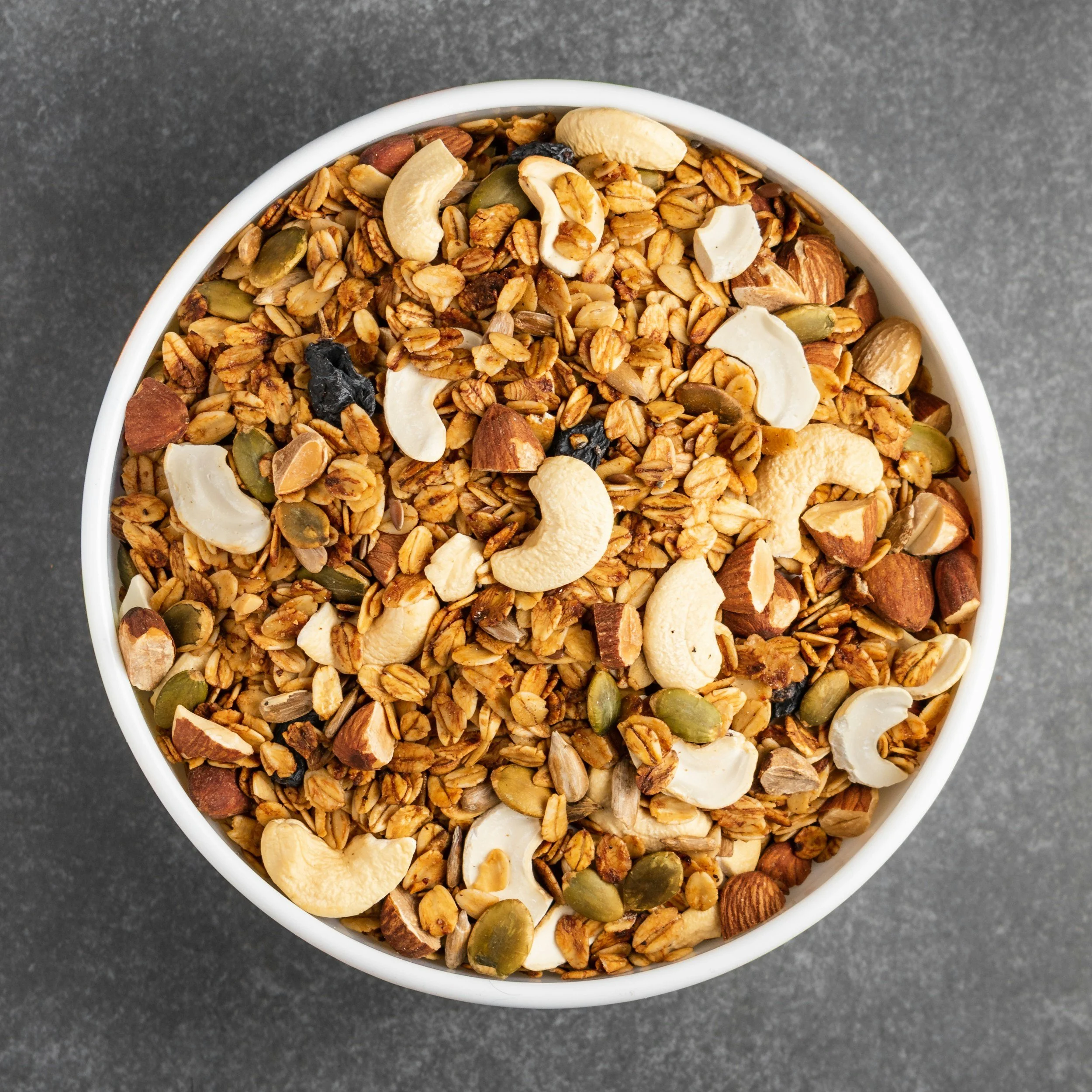
Fiber is the under-hyped nutrient that can make digestion, energy, and hunger feel easier. Here are simple high-fiber foods to add to your grocery list this week.

Explore practical, evidence-informed strategies to quiet constant food thoughts ("food noise") and create a more sustainable, less stressful approach to fat loss through foundational habits and mindful nutrition strategies
Weight loss is doable for some. Keeping weight off is the hard part. Here are 8 evidence-informed mindset and habit traits that make weight loss maintenance feel doable long-term.
Fat loss can still happen when life feels chaotic, and without tracking macros. Here’s how to focus on the few priorities that actually matter when routine isn’t an option.

Body recomposition - losing fat while gaining muscle - is possible, but not for everyone at the same pace. Learn what’s realistic and what supports your aesthetic and performance progress.
A calorie deficit doesn’t have to mean hunger or burnout. Learn how sustainable fat loss works and how to approach a deficit in a way that fits real life.

Tired of chasing quick fixes? Discover how diets really work, why extreme restriction backfires, and how to build sustainable fat loss habits.

Think you have a slow metabolism? Here’s what that really means, why it happens, and four ways to support fat loss without over-restricting.

Set point theory suggests your body has a “preferred” weight it tries to maintain, but that doesn’t mean you can’t influence it. With supportive habits, a positive environment, and the right mindset, you can shift your body’s balance and create sustainable change that lasts.
Think your metabolism is “slow”? Coach Kenny explains what metabolism really is, how your body burns calories, and which habits make the biggest impact. Learn the four parts of calorie burn—BMR, NEAT, TEF, and exercise—and discover practical, science-backed ways to support a healthier, more efficient metabolism without gimmicks.

Want to get lean and stay lean? Coach Zach shares the real trade-offs of fat loss—from calorie tracking to social sacrifices—and why extreme leanness isn’t always sustainable. Learn what realistic fat loss looks like, and how to choose a balanced approach that boosts confidence, energy, and health for the long term.

If you've ever Googled how to lose belly fat, you've likely been bombarded with ads for fat-burning pills, ab workouts that “torch belly fat,” or juice cleanses that claim to detox your body and flatten your stomach. Nutrition advice is everywhere—and unfortunately, so are the myths. Some of them sound convincing, others just won’t die. Fat loss isn’t a magic trick; it’s a physiological process. And unfortunately, a lot of popular advice is more marketing than science. In this post, we’re breaking down four persistent fat loss myths, explaining what really works (and what doesn’t), and helping you make sense of common buzzwords like spot reduction, detox, and fat burners.

When it comes to health, fitness and weight loss goals, most people focus on the physical: what to eat, how to move, which “plan” to follow. But the truth is, the biggest obstacle isn't always your body -- it's usually your mind (or your mindset). One of the most common (yet sneakiest) roadblocks we see with our clients is self-sabotage. In this week’s post, we’re diving into what self-sabotage is, how to spot it and ultimately, how to decide if self-sabotage is the thing that’s been holding you back from making progress towards your nutrition and fitness goals.

At Kate Lyman Nutrition, we strongly believe in the power of macro tracking because of the education around food composition and insight into one’s nutritional choices and behaviors it can provide. That insight, even if only examined closely through numerical data for a brief period of time, can be a tool that continues to serve someone for their whole lives. In fact, we also strongly believe in moving away from macro tracking regularly once someone feels solid in the foundational habits they initially used tracking to develop and hone!

Fat loss can feel like a never-ending tug-of-war. You work hard all week, but then life throws you a curveball, and suddenly, your progress feels shaky. It’s easy to get caught in an all-or-nothing mindset, but what if the secret to success wasn’t about being perfect at all? Instead of seeing every bump in the road as a setback, what if you could learn to navigate them with a little more flexibility and a lot more compassion? Let’s talk about how to find that balance in pursuing your weight loss or body composition goals without feeling like you’re always starting over.

When we work with clients with body composition goals, we highly encourage them not only to weigh themselves but also to take body measurements. While measuring with a tape measure can feel a little clunky or old-school, the combination of these two data points provides important feedback that can help us clearly understand the trajectory of your fat loss goals and how we can adapt our strategy to ensure progress continues.
Weight loss plateaus can be a very frustrating part of working towards your body composition goals. If you constantly lose weight, you'd ultimately cease to exist. But that flatline in progress can feel like a GIANT roadblock, casting doubt over all the work you’ve put in.

Reverse dieting is the practice of increasing a person’s total daily caloric intake after a period of prolonged caloric restriction (aka a diet). Reverse dieting is all the rage on the internet, with social media promoting specific “Reverse Diet Coaches” and overly complicated reverse diet protocols to follow after time in a calorie deficit.

When it comes to pursuing a fat loss goal, we know there are two main necessities to successful fat loss: First, consistency in a calorie deficit. Second, adequate protein intake. These two necessities are our top priority, but they don’t encompass all of the strategies that help us make these actions possible. Today, I want to talk through three of the most underrated strategies that help us achieve that consistency and feel good during a calorie deficit so that our fat loss goals don’t come at the expense of our energy, workouts, recovery, or relationship with food.

There will always be periods of time, whether it’s weeks, months, or years, where you may not be able to maintain your leanest or fittest point, and that’s normal. But if you take time to build foundational skills and habits, you can keep that maintenance range in a place that feels good to you. And you can always return to some of those more time-intensive skills and practices when capacity allows.

A maintenance phase is arguably the most important season of our nutrition since it’s where we can best focus on the habits that help us find harmony with our physical, mental, emotional, and social health. Without the prioritization of changing our bodies, the other aspects of our lives that we value can better be at the forefront. However, that doesn’t mean that body composition can’t remain in the periphery. The foundational habits that we develop before or alongside a focused fat loss phase, with the goal of long-term physical change, continuously support small aesthetic changes over time.

If you’re in a calorie deficit and working towards fat loss goals, a main goal should be minimizing any feelings of restriction or hunger so you can maximize adherence to your deficit. This is why we, as coaches, take a strong stance against aggressive and unsustainable deficits. If our hunger is through the roof each day, it’s not very likely that we’ll be able to adhere to that calorie deficit for long. Luckily, there are tools that can help us minimize hunger and, luckily, those same tools also keep us well-fueled and promote our overall health as well.
Before jumping into another fat loss phase, it’s worth building the skills that make consistency in a calorie deficit feel less chaotic. We’re covering three foundational habits to practice first: creating meal structure, building filling plates, and returning to your routine without “starting over.”