
Grocery lists, grocery stores, meals, snacks…if your heart rate increases reading those words, you’re not alone.
Between busy schedules, back-to-school routines, work, workouts, and trying to remember if you already bought Greek yogurt this week, grocery shopping can feel way more complicated than it needs to be.
Let’s make grocery list building the easiest part of your week.
In this guide, you’ll learn how to make a simple, balanced grocery list you can use for meal prep, easy weeknight meals, and busy back-to-school routines.
Step 1: Build a realistic grocery list around your real life
The foods we consistently keep around often reflect the season of life we are currently in: busy schedules, back-to-school, shifting routines, convenience needs, personal preferences, stress levels, and everything in between.
That’s why building a grocery list that supports your actual lifestyle matters far more than trying to shop like your “ideal” self. Before we make an efficient grocery list, we first need to identify the basic components of the meals we’ll realistically be eating throughout the week.
If we know that each main meal contains our “balanced meal formula” (protein + carb + fat + fruit + veg) and we eat three main meals per day, then we have an easy starting point for the types of foods we need.
Main meals, where hunger generally centralizes throughout the day (think: breakfast, lunch, and dinner), can be broken down into those same five food categories: proteins, carbohydrates, fats, fruits, and veggies.
Conveniently, that’s exactly how we are going to structure our grocery list!
Step 2: Use six simple grocery list categories
Snag a pen and a post-it, rip a page out of that composition notebook sitting in your junk drawer, or open the Notes app between school pickup and your next meeting. I want you to write down those same five categories plus a bonus:
Proteins
Carbohydrates
Fats
Fruits
Veggies
and snacks (Snacks can include a mix of protein, carbs, fats, fruits, or fun foods that help you feel satisfied between meals.)
In order to keep some sort of variety throughout the week, we’re going to aim for two to four different foods in each category. Even if you are a die-hard recipe person, having a variety of options in your meal-planning toolbelt could be useful for those last-minute or on-the-go situations.
Below you’ll see what I’ve called a Varied Foods List. It’s a simple graphic I made for teaching kiddos about the various food groups during the beginning of my coaching career. It’s simple, easy to visualize, and makes grocery planning feel far less overwhelming. If you’re staring at a blank page, use this as a menu of ideas (not a list of foods you have to buy).
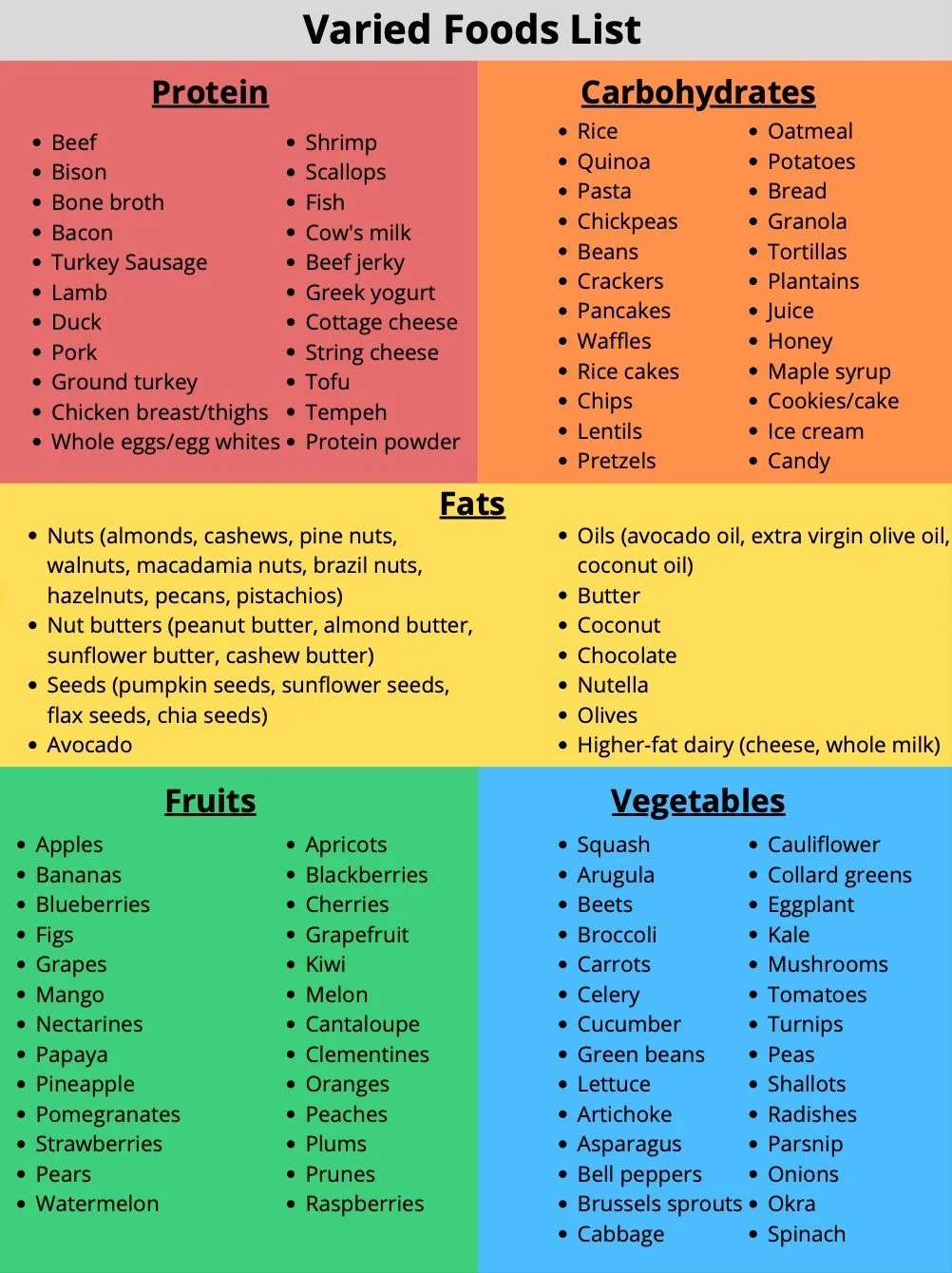
Step 3: Choose two to four foods for each grocery category
This graphic is just a starting point. If you are currently hyper-fixated on Trader Joe’s chicken meatballs (ahem, it’s me), do not hesitate to jot them right down. Don’t overthink it. Whatever sounds good, is on sale, or is taking up brain space right now-write it down. Remember: this is supposed to be a realistic list for you.
Here’s a look at my grocery list:
Proteins
chicken meatballs
ground beef
Greek yogurt
eggs (already in the fridge)
turkey bacon
Carbs
rice
beans
tortillas (high fiber ones to help reach that daily goal!)
granola
Fats
spray avocado oil (already on hand-thanks, Costco!)
peanut butter
sriracha mayo
cheese
Fruits
raspberries
honeycrisp apples
strawberries
Veggies
asparagus
broccoli florets
green beans
frozen edamame packets
Snacks
individual trail mix packets
chocolate rice cakes + cool whip + PB
Barebell protein bars
Step 4: Turn your grocery list into simple meal prep
It’s time to batch prep and then mix and match! I know you might be wondering…batch prep?! As in plain Jane bodybuilder meals? Not a chance. Boring plastic food prisons are what I consider meal prep of the past. Prefer recipes only? More on that below.
Proteins take the longest to cook from raw, so cook those first! No time to cook? Buy them pre-cooked. Prepare and place into separate containers to pull from throughout the week.
If you do not want to commit to one flavor for several meals, then I suggest using basic seasonings (salt, pepper, garlic powder, onion powder-a good start) and adding in seasonings/sauces after you pull from the prepped containers throughout the week.
I use the term “week” here very loosely. If the thought of prepped food sitting for a week in the refrigerator gives you the heebie-jeebies, then choose two days throughout the week to prep enough for a few days at a time.
Step 5: Keep your grocery list realistic and flexible
Personally, I cannot be bothered to chop fruit or veggies every single time I want to eat them. If I leave them whole in the fridge, there’s a good chance they’ll end up forgotten and eventually spoiled (womp womp).
Because I know this about myself, I set aside 10 minutes after grocery shopping (or grocery delivery-thank you Instacart) to wash and prep everything immediately. If you know that you aren’t going to cook potatoes from scratch every time you plan to have them with a meal then it is in your best interest to cook them to your liking and slap them into a container for the fridge (enough for the next few days is fine). You could also buy them frozen and quickly reheat in the air fryer.
If you feel as though you operate best with recipes, then rock on! I suggest making double the portion sizes so you have enough for leftovers the following day or to stock up in the freezer (did someone just say easy built-in meal prep?!).
Step 6: Mix and match easy meals from your grocery list
We have to eat for the rest of our lives– no ifs, ands, or buts about it. Let’s not have it be the most complicated decision we have to make on a daily basis, yeah?! Making balanced meals requires our “balanced meal formula” (protein + carb + fat + fruit/veggie), so when it comes time for a meal simply refer back to your grocery list (which could turn into your own Varied Foods List!). I highly suggest grabbing a dry erase board for the front of the fridge to write down grocery needs (remember the six categories) as you polish off foods throughout the week.
The structure of the meals you put together with your categorized batch prep is up to you. What are you in the mood for–burgers, sandwiches, tacos, burritos? Or maybe it’s throw-everything-onto-a-plate/bowl night.
The key players of our meals are often the components I see newer clients under-prioritize most: protein and fruit/veggies. With that in mind, pick out those items first. Carbs and fats are where we get to play and have fun with meals.
Crockpot chicken (protein) + broccoli florets (veggie) + tortilla & BBQ sauce (carb) + spray avocado oil (fat) = BBQ crockpot shredded chicken wraps w/ broccoli on the side
Ground beef (protein) + green beans (veggie) + microwave rice (carb) + sriracha mayo (fat) = spicy burger bowl
Greek yogurt (protein) + raspberries (fruit) + granola (carb) + peanut butter (fat) = yogurt bowl
Whole eggs & turkey bacon (protein) + strawberries (fruit) + toaster waffles (carb) + sliced cheese (fat) = breakfast sandwich
Get the gist?!
How to make grocery shopping feel less overwhelming
When schedules get busier in the fall, having flexible grocery staples on hand matters more than having the “perfect” meal plan. Grocery lists do not need to feel like an all-or-nothing event that require a perfectly curated Pinterest board or some magical surge of health-minded motivation. Having a simple system for building your grocery list can make the entire process feel less overwhelming and a whole lot more sustainable.
If you only take one thing from this post, start your list with protein, carbs, fats, fruits, veggies, and snacks — then choose foods you’ll actually eat.
Start with your six categories,
choose foods you actually enjoy eating,
and remind yourself that food flexibility matters more than food perfection.
The less mental energy you spend stressing over what to buy each week, the more energy you have for, well…literally everything else life throws at you.
Want more meal support?
Explore our extensive library of macro-friendly recipes or grab our free Ultimate Guide to Batch Prep for simple and streamlined macro-friendly meal prep ideas and recipes.

Kimberly ZeHnder
Certified NTP, eating disorder survivor, and former D1 athlete guiding clients away from restrictive past eating habits and toward food freedom with a body built on trust and respect.
You might also like

Sign Up for the newsletterFollow KLN on social media
AI can create meal plans, grocery lists, and nutrition tips in seconds, but lasting change usually takes more than information. In this post, we’re breaking down what AI can do well, where it falls short, and why human nutrition coaching can help you build realistic habits that actually fit your life.