
If you’re trying to build muscle or improve performance, the foundation is eating enough calories, carbs, and protein. Then we use pre, intra-, and post-workout fueling to improve training quality and recovery.
Let’s cover the big rock first
If you have a training goal to build muscle, get stronger, and improve your fitness, then the most important nutrition habit you can build is simply eating enough calories, carbs, and protein to support your goals. If you aren’t consistently eating enough, then it doesn’t matter if you drink LMNT electrolytes and slam a post-workout shake right after your pump sesh - you’re just the guy trying to fix a massive leak with a little bit of tape.
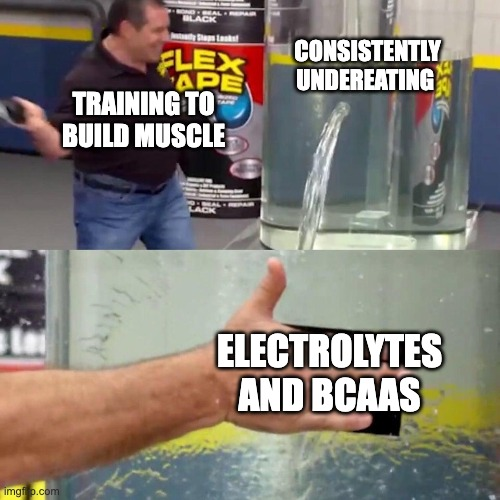
So this is the first and most important piece of advice if you are working towards being fitter, stronger, faster, and healthier: you need to eat enough for your goals. When you don’t eat enough, you end up with:
Low glycogen stores
Inadequate protein intake.
Regularly training with restricted glycogen stores and inadequate protein intake
reduces training intensity
increases muscle breakdown
increases susceptibility to illness and infection
All three of those are no bueno. So, eat enough.
In order to help you eat enough, you can implement the pre-, intra-, and post-workout nutrition tips listed below.
Fueling properly before you train sets the stage for better energy, higher training intensity, and faster recovery.
How to Plan Your Pre-Workout Meal
Eaten approximately 3–4 hours before training, this meal should prioritize carbs and protein while keeping fat lower for easier digestion. If you’re a morning exerciser who wakes up and goes straight to the gym, then treat your dinner the night before as your pre-workout meal.
In this meal we want plenty of carbohydrates, a decent amount of protein, lower fat, and foods that we digest well. A rough guideline could look like a plate with:
⅓ – ½ of your daily carb goal
¼ – ⅓ of your daily protein goal
No more than ¼ of your daily fat goal
This pre-workout meal will help you eat enough in general, fill glycogen stores, and provide the protein your body needs to recover from training.
Some examples
Breakfast - glass of orange juice, a banana chopped up into a bowl of cheerios, low-fat fairlife high protein milk, two eggs
Lunch - turkey sandwich with cheese/avocado/mayo (some fat), an apple, a rice krispy treat
Dinner - Pasta with marinara sauce, lean ground beef, parmesan cheese, green veggies
Do you also need a pre-workout snack?
Some old-school dogma suggests avoiding carbohydrates close to exercise. However, current evidence indicates that consuming carbs shortly before (e.g., 15 minutes before) training/competing can minimize the risk of rebound hypoglycemia and may even improve exercise capacity and performance.
Do you really need a pre-workout snack?
if you’re lifting for 45–60 minutes, you probably don’t need a pre-training snack.
If you’re heading into a tough 90+ minute training session, then a pre-workout snack will be beneficial.
A rough guideline for a pre-workout snack:
Eat 30–90 grams of carbs. This recommendation is on a sliding scale: the longer or more intense the session, the closer to 90 grams you should be.
Choose easily digestible carbs. Some examples that I personally love are,
Bananas
Rice Krispies treats
Cereal
Gatorade
Orange juice, etc.
Read the full series
If you’re training hard and want your nutrition to actually support performance, recovery, and consistency, grab our free Performance Nutrition Guide. It breaks down how to fuel training without overcomplicating things—so you can eat enough, train better, and feel stronger session to session.

Kenny Lyman
Dad and Hyrox athlete helping clients turn hard work into real results without falling for every shiny new diet trend.
You might also like
Sign Up for the newsletterFollow KLN on social media
Part 3 of our workout nutrition series - Simple, evidence-based pre, intra, and post-workout nutrition tips to fuel training, improve recovery, and stop under-eating for your goals.