
“Tracking macros is too time consuming.”
We hear this sentiment regularly from new and prospective clients, and we get it: when life is busy (and it is busy for the high-achieving professionals and parents we work with!), any additional to-do feels like the proverbial Jenga piece that will topple the whole structure.
For someone working on changing their eating habits to support a bigger-picture health goal, macro tracking can be time well spent in the short term.
Tracking our nutrition can help us to:
Recognize and quantify eating patterns.
Gain a better understanding of how to meet our nutrient needs in actionable ways.
Learn just how flexible we can be in our approach to both food and tracking itself.
Tracking isn’t necessary or the right fit for everyone. If it increases anxiety or rigidity around food, other nontracking ways of building awareness may be more useful.
Then, once we are equipped with this first-hand knowledge and experience, we can confidently move away from tracking and rely solely on the continuation of the behaviors we have built.
Use macro tracking to recognize your eating patterns
If we have goals to make changes to our eating patterns, we typically have a general idea as to what our less-than-goal-aligned behaviors already look like. Some common ones include:
Frequently snacking when we’re not hungry, or substituting snacks for meals and creating a perpetual cycle of never feeling fully satisfied.
Going out to eat/grabbing takeout multiple times a week and ordering based purely on cravings.
Having a drink (or several) at the end of the long day (…and man, aren’t they all long?!)
Without a framework or method to quantify them all in one place though, we might not understand the full weight of their implications, and beyond that, which ones are perhaps more of a hurdle to us making headway towards our goals than others.
Enter macro tracking: a one-stop shop to gather more specific data from which to gain more pointed awareness.
The eye-opening nature of tracking is often mentioned by our newer clients in their first several check-ins as they start to quantify their nutrition behaviors and make correlations within the context of learning about their specific energy balance needs for their goals.
From a recent newer client check-in of mine:
“I’m not shocked how it was so easy to pack on the pounds when consistency is lost. As I learned on Saturday, downing 3500 calories while not paying attention is no freaking problem - I could do that in my sleep! But it also felt so unnecessary and I went to bed super full. Like I didn't need all the things I was eating/putting into my body…it's just becoming more and more evident to me that I eat a lot out of boredom, out of desire to fill time/adhere to senses, not because I'm needing those calories. So choosing one or two things to give me [what] I'm looking for–a couple of beers early in the day, or a big dinner, but not all at once.”
Macro tracking isn’t the end goal: it’s a tool to help us understand and adjust the eating behaviors that support bigger-picture change.
Turn tracking insights into practical food choices
Once we have started recognizing patterns and seeing their implications on our energy balance needs, we can leverage that information to make actionable changes. If, for example, we’re struggling to eat an adequate amount of protein, we can try:
Incorporating a daily protein shake.
Eating a serving of Greek yogurt as a snack.
Adding an additional ounce or two of our chosen protein source to lunch and/or dinner.
Or if we’ve found that our fiber intake is low, we can:
Make a dense bean salad variation a weekly food prep staple.
Keep frozen raspberries and blackberries on hand for an easy addition to breakfast.
Swap our usual egg-y breakfast for overnight oats a few times a week.
This is how we explore what feels both feasible and enticing for us: in our coaching experience, changes are easier to sustain when they fit our lives and include foods we enjoy.
Do you need to track macros perfectly to make progress?
Perhaps you’re reading this and thinking, “ok, but if I can’t weigh and track every single thing perfectly every single day, what’s the point!? Will tracking even be effective for me?”
You don’t need to track macros perfectly to make progress. Consistent tracking (yes, even with estimates!) can help you recognize patterns and practice eating habits that support your goals.
As a nutrition coach who has worked with hundreds of clients over the past nine years, never once has “perfect” macro tracking been required for any of them to see progress.
In fact, I actively encourage my clients to avoid falling into the trap of “perfection” because it only creates rigidity around food that is both miserable and unsustainable (when my bigger picture goal for them is joy and sustainability!) Some goals may require more precision than others, but the vast majority of the time, simply developing and keeping consistent patterns around tracking move the needle the most.
We don’t need to stress hitting specific carb and fat targets; we simply need to keep calories and protein within goal-aligned ranges and be considerate of avoiding extreme lows with carbs or fats.
We don’t need to be overly preoccupied with weighing every serving of protein to the gram; we need to develop the skill of visually identifying roughly what amount will help us get 30-40 grams of protein.
We don’t need to bring our food scale to a restaurant or only eat at restaurants with nutrition information available; we need to pick an entry in our tracking app that seems close enough based on an educated guess and focus on enjoying the food and/or time with loved ones. This is what we call the “surrogate method.”
How flexible macro tracking looks in real life
Another client of mine came to KLN with a concern: could tracking work for her while she continued eating out frequently? She lives in New York City, has a demanding career, and enjoys an active social life with friends who share her refined palate. She wanted to lose body fat without sacrificing what she loves most about her city and lifestyle.
She already wanted to develop a routine around regularly food prepping to reduce the amount of time she spent thinking about food. She recognized that the effort up front could create ease down the line, but she felt apprehensive about tracking when meals out would still be a regular part of her life, either by necessity or choice.
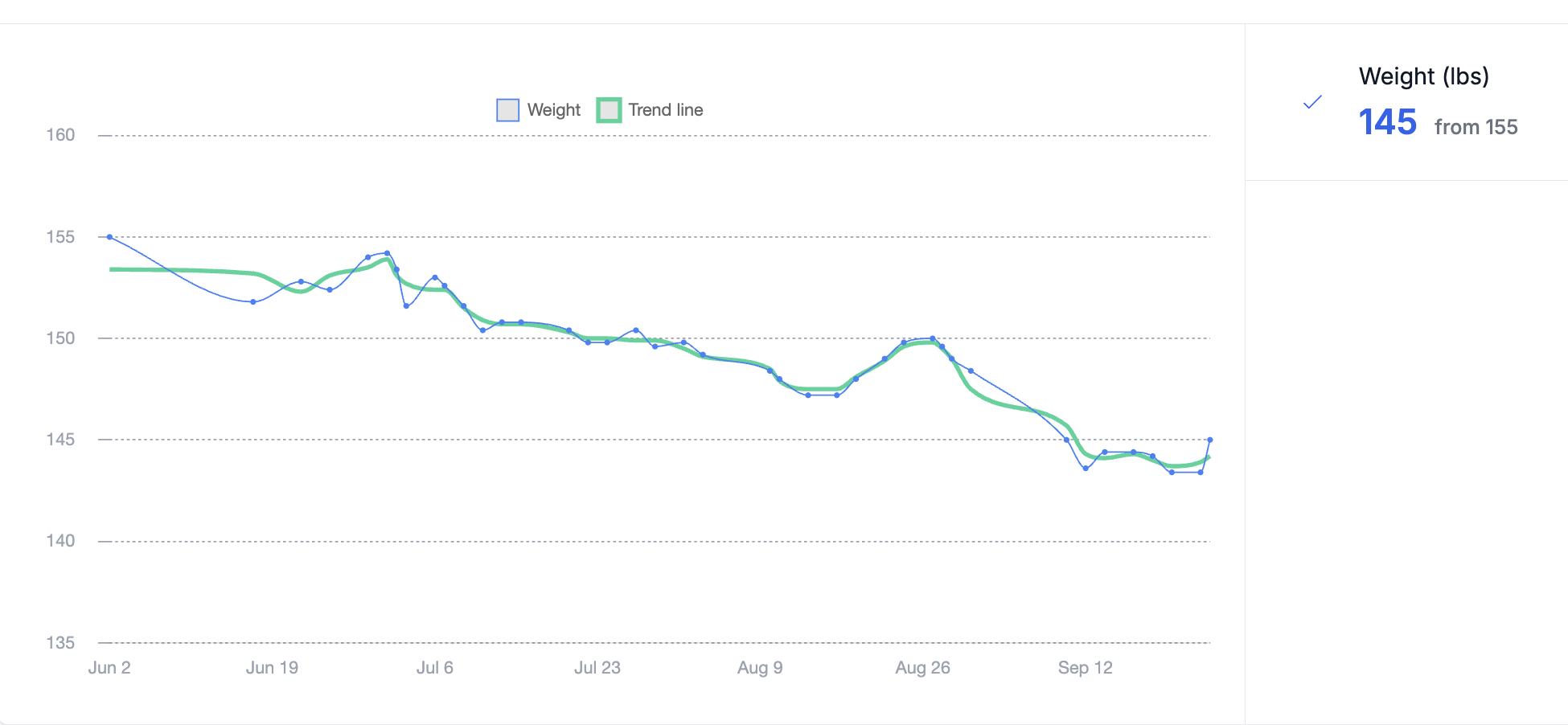
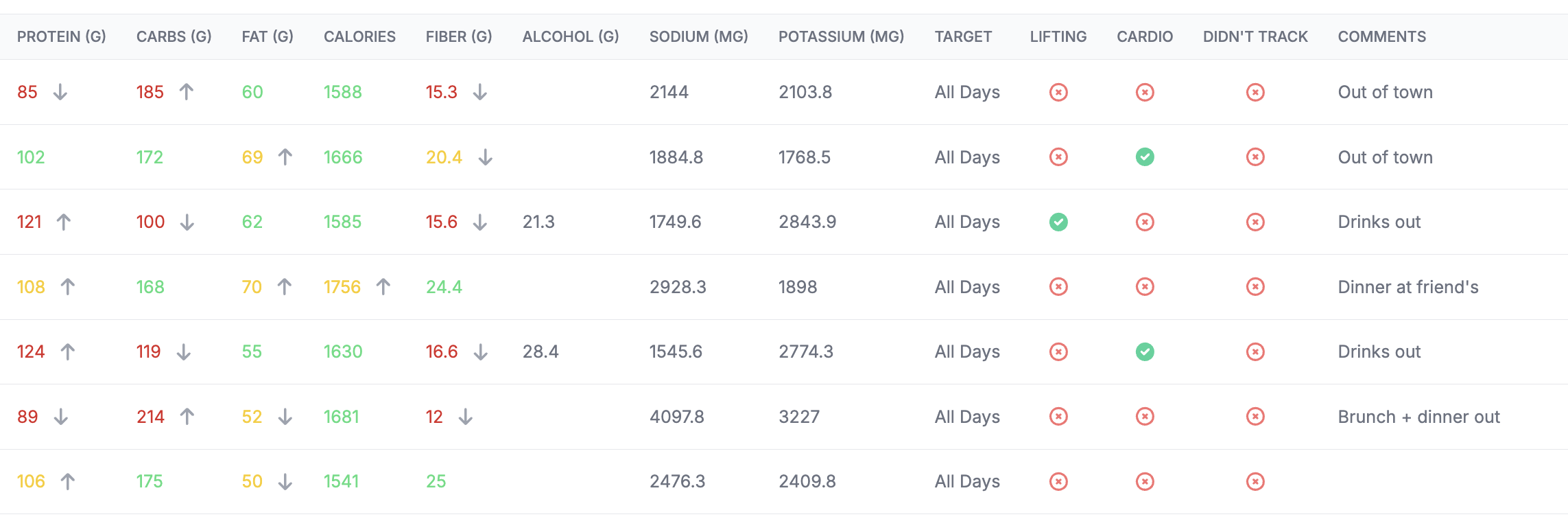
Over 16 weeks, with at least a couple of meals out and/or some sort of travel every week, she has lost 10 pounds. Her results are individual, not a timeline or outcome everyone should expect. The behaviors she worked on included:
Identifying and regularly preparing well-balanced staple meals and snacks she enjoys.
Increasing her overall protein intake.
Ordering protein-forward options most of the time when out to eat.
Learning to become discerning of what foods feel “worth” or “not worth” being more flexible for, and having checks and balances in place for keeping an overall goal-aligned harmony (e.g. if she wants a cocktail, she’ll pass on dessert; if the bread basket is calling to her, she’ll have a side salad with her veggie burger instead of fries).
Using estimations to track most of the time when she hasn’t prepared the meal (though becoming increasingly more comfortable with not tracking certain meals or full days depending on the circumstances, yet keeping behaviors steady).
We of course have her macro targets set to be in a conservative yet effective deficit, though this adjustment only happened after we had developed a solid baseline in our first 4 weeks together, using tracking as a tool to initially gather more specific data and hone in on what behaviors, if shifted, would have the biggest impact on her progress.
Use tracking to build skills, not dependence
Any worthwhile change is going to take effort: it’s an inevitability of life. The more pointed and specific we make that effort up front, the more streamlined our change journey can be.
Macro tracking is an unparalleled tool for structure when applied with intention (not perfection!). Used long enough to glean what we need to from it, it can help us move away from tracking feeling more informed about and empowered by what our healthiest, happiest food behaviors look like.
For more on moving away from tracking while keeping the habits you’ve built, read How to Stop Tracking Macros Without Losing Your Progress: Part 1.
Want to see progress without perfection?
You are unique. So our 1:1 Nutrition Coaching is laser-focused on your needs, your preferences and your lifestyle. Together we build the long-term nutrition habits that will help you make and maintain progress for life. Find out more about our personalized approach

Jilda Lamb
Business owner, dog mom, and certified menopause coach, helping overwhelmed professionals and busy athletes simplify their nutrition and feel their best, both physically and mentally.

Find the coach whose experience, personality, and coaching style suits you best.
You might also like

Sign Up for the newsletterFollow KLN on social media
Tracking macros can teach you more than what’s in your food. Used with flexibility, it can help you recognize eating patterns, meet your nutrition needs, and build habits that last beyond the app. Here’s what to focus on, and what you don’t need to get perfect, to make tracking a useful tool rather than another set of food rules.