
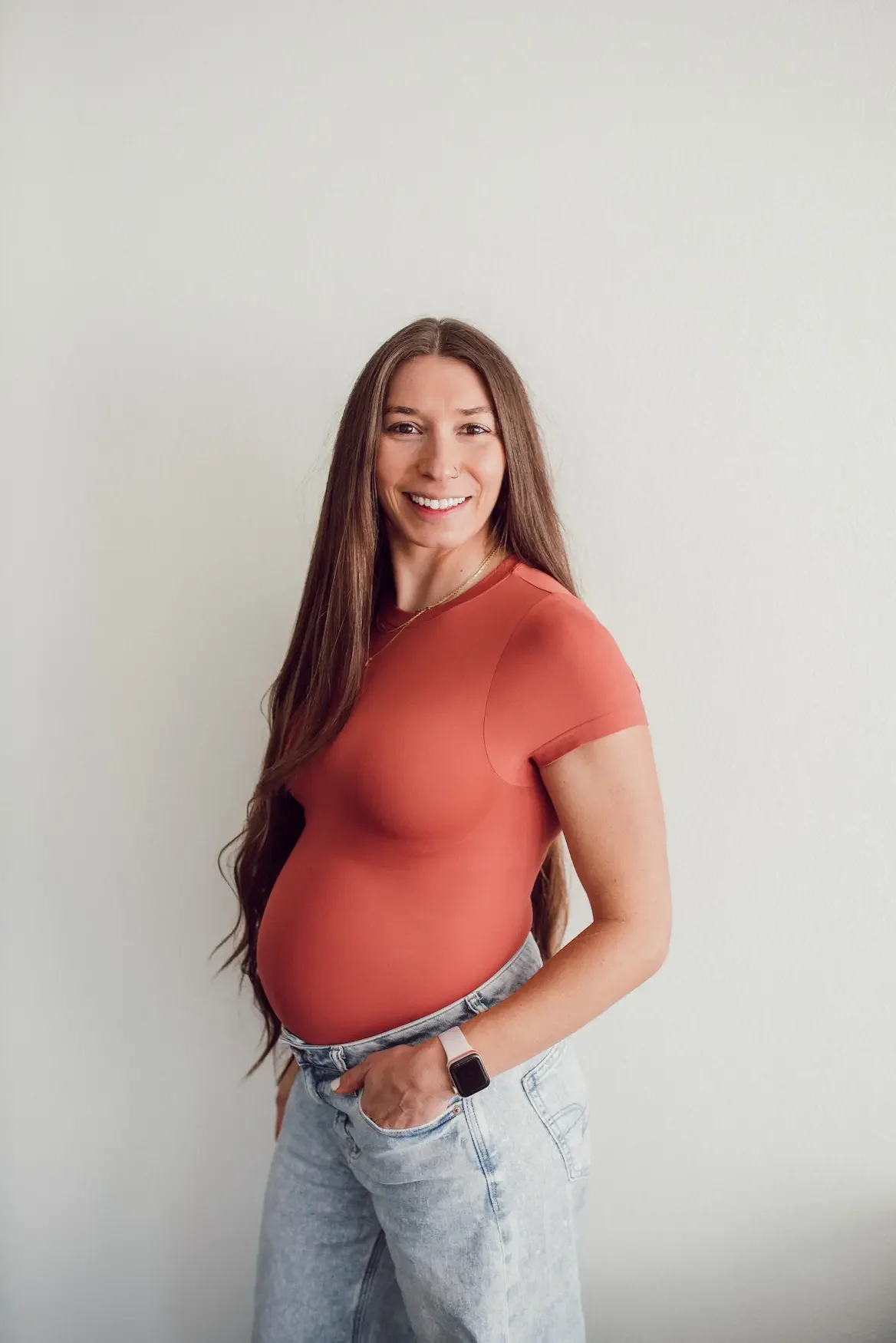
Spoiler alert: This isn’t a guide on how to slash calories, survive gruelling workouts, or squeeze into your pre-pregnancy jeans. If you have aesthetic or fitness goals after having a baby, that is completely okay! But as a nutrition coach and a mom of two, I’ve learned that sustainable postpartum health isn't about getting your old self back; it's about embracing the updated version of who you are.
During my second postpartum journey, I realized that true behavior change doesn't start with what you do (like tracking macros or hitting gym metrics). It starts with identity.
When you have a baby, your life changes in a BIG way. Your brain also changes, and as a result, your identity shifts and evolves. If you try to force a new lifestyle using an outdated version of yourself, you create friction. "Getting your body back" is actually an opportunity to build a new baseline, update your identity, and move forward. In this week’s post, I’m sharing how shifting my mindset from loss to evolution changed everything for me the second time around.
1. Shift Your Postpartum Mindset From Loss to Evolution
In early postpartum, it’s easy to fixate on what you've lost: strength, fitness, or your old schedule. The second time around, I chose to focus on what I was gaining. Your pre-pregnancy self provides context, but it is not the same body or the same life. That doesn’t mean that you won’t ever do the things you did before (in and out of the gym), but it’s important to acknowledge the amazing transformation your body has undergone through both pregnancy and birth and into postpartum. By treating the postpartum stage as a clean slate rather than a deficit, you remove the pressure to immediately perform and create space to celebrate the rebuild.
The first time around, I constantly compared my gym performance to my pre-pregnancy self. The second time around, I realized that was a waste of my time and energy (both of which are at an ultimate premium during this season).
I leaned into the process of creating a brand-new baseline. I got excited about using my previous foundation in the gym to rack up updated personal records, while also taking my time. This allowed me to match my habits to the mom I was now, not the athlete I was years ago. I still identify as someone who is athletic, strong, and fit; I simply updated what this meant for me in my current season of life. This allowed me to appreciate and celebrate the time in my life when this looked different before kids, while also feeling proud of the ways I’ve updated what that means now.
Identity Shift Example:
Old Identity: "I am an athlete who lifts X pounds and hits high-intensity PRs."
Upgraded Identity: "I am a strong, athletic woman whose training currently honors recovery and long-term wellness while setting a positive example for my daughters.”
Result: I still identify as athletic, but I have redefined what that looks like in this season without feeling like I’ve regressed.
2. How to Set Healthy Postpartum Goals That Actually Support You
Society encourages us to be outcome-focused (fixating on a target weight or clothing size), especially when we feel uncomfortable in a post-baby body. But behavioral science shows that being process-focused is what actually builds a growth mindset.
During the 4th trimester (the first 12 weeks postpartum), your body, hormones, and routine are in flux. Setting strict body composition goals here is rarely realistic, especially if you are breastfeeding. Focusing on daily supportive actions instead of objective metrics lowers friction and allows you to preserve the core of who you are.
How do you set realistic postpartum goals? Think about how your goals support who you are and who you want to become.
Identity Shift Example:
Old Identity: "I am someone who needs to lose 15 pounds to feel like myself."
Upgraded Identity: "I am a well-nourished, supported mother who prioritizes daily energy."
Result: Instead of agonizing over a scale number, you ask yourself each morning: "What does a supported mother do today?" (e.g., eating a balanced meal, drinking water, taking a walk).
3. Create Sustainable Postpartum Routines Using "Minimums"
When your mental battery is drained, relying on willpower isn’t a reliable strategy when you’re overstimulated and always on the brink of decision fatigue. Habits serve as a tool in place of willpower by eliminating deliberate decision-making. With solid habits, you don't have to waste energy debating if or how or when to do something. (You know that paralysis that happens when the kids are asleep and you finally have exactly 59 minutes to complete your whole to-do list and workout and meal prep or take a nap?)
To make habits stick when life is chaotic, I coach my clients on the power of "minimums” and use the same strategy myself. For example, I used to think a workout only counted if it was executed perfectly. Now, if one of my daughters wakes up early and cuts a session short, I’m just happy for the 30 minutes I did get done. Setting minimums also gives you permission to just "go through the motions" on hard days while keeping the habit alive.
By offering yourself more flexibility through minimums, you aren’t compromising the standards you may choose to live by either; you’re just setting yourself up for greater success during the hard days or really stressful weeks.
Identity Shift Example:
Old Identity: "I need an uninterrupted 60-minute workout for it to count."
Upgraded Identity: "I am a consistent person who moves my body, even in micro-doses."
Result: A 10-minute walk or a 15-minute mobility session reinforces your identity as a consistent person, completely eliminating the "all-or-nothing" guilt.
4. Overcoming Postpartum Burnout: Normalizing the Messy Parts
After my first daughter, I craved my pre-baby routine because it made me feel safe and in control. But welcoming a child requires an updated life flow and the transition will be messy. Humans love to feel consistent.
When a habit is tied to who you believe you are, it fast-tracks the action into a repeated, automatic behavior.
What we do frequently becomes who we are. This doesn’t mean that you have to lose the things that help you feel grounded or feel like yourself. However, changing the way you think about yourself during stressful times, chaotic days, and everything in between can make all the difference!
Identity Shift Example:
Old Identity: "I am someone who thrives when my day is optimized and completely under control."
Upgraded Identity: "I am an adaptable mom who can find grounding in the middle of chaos."
Result: You stop viewing schedule disruptions as personal failures and start viewing them as normal parts of a dynamic lifestyle.
5. Build a Postpartum Support System and Practice Asking for Help
Your identity as a mother expands when you allow a community to support you. Asking for help isn't a sign of weakness… it’s a radical form of self-care!
After I had my first baby, I clutched hard to my independence and freedom. The second time around, I started shifting my mindset during pregnancy because I knew that asking for help would not only make the transition with two easier, but it would make me a better mom and allow me to support my independence even more.
I had to practice simply receiving help, whether it was saying "yes" when someone offered to hold the door at the grocery store or outsourcing my workout programming or nutrition to a coach. Outsourcing the decision-making and planning freed up an unexpected amount of valuable brain space and allowed me to return to movement and fueling my body well safely and more quickly without decision fatigue.
Identity Shift Example:
Old Identity: "I am an independent woman who has to do everything myself to prove I'm strong."
Upgraded Identity: "I am a smart leader of my household who leverages support so I can show up energized for my family."
Result: Accepting help (or hiring a coach) feels like a strategic self-care decision rather than a compromise of your capability.
The Postpartum Non-Negotiables That Kept Me Grounded
While my mindset evolved, there were a few foundational things that I did for both of my pregnancy and postpartum experiences because they worked well for me!
I did "Nothing" for the First Month: I took four weeks completely off from work and structured workouts to acclimate, rest, and bond without pressure. For me this included seemingly small things like not wearing my Apple Watch or fitness tracker and sharing one nap a day with the baby.
I followed a Postpartum Rebuild Program: I committed to the "boring" restorative work once I did start to reintroduce movement as a way to protect my joints, rebuild core stability, and ensure long-term strength without pushing myself too hard or too fast.
I prioritized Pelvic Floor PT: In my opinion, pelvic floor physical therapy should be standard prenatal and post-birth care. It allowed me to safely reconnect with my body and reset my physical baseline both times. I believe this has contributed in a huge way to my ability to have fun rebuilding my baseline knowing I could trust my body along the way.
I protected Mental Health & Boundaries: I kept seeing my mental health practitioner to navigate hormonal shifts and set firm boundaries when returning to work. Working with someone who specializes in women’s health and supporting moms has also been helpful for me in gaining perspective through tough parenting bumps and frustrations.
There Is No “Back,” Only Ahead
Being pregnant and raising children demands everything from us physically, mentally, and emotionally. There is no magical "before" to return to! In the season of postpartum, you have a profound opportunity to give yourself a fresh start. By trading comparison for compassion, you can stop chasing an old version of yourself and start building an empowered, updated version of who you are today. And how fun is that?!
READY TO EMBRACE YOUR POSTPARTUM SEASON?
If you’re navigating postpartum goals and want support rebuilding habits in a way that actually fits your life, KLN coaching can help you create a flexible, realistic plan. Work with one of our Postnatal Specialists and get individualized nutrition support for this season of life.

Diana dewan
Meal prep guru, yogi, and certified prenatal and postpartum coach helping clients ditch the all-or-nothing mindset and build lasting habits through all seasons of life.
You might also likeSign Up for the newsletterFollow KLN on social media